Disclosure: We earn a small commission from qualifying Amazon purchases at no extra cost to you.
Reviewed by the The SF Post Editorial Team
Finding the right ceramic vs titanium vs tourmaline flat iron comes down to matching watt-hours to your actual power needs.
As an Amazon Associate, we earn from qualifying purchases.
Last Updated: June 2026 | Written by The SF Post Editorial Team
Walk down the hair tools aisle and you'll see the same three words slapped on nearly every box: ceramic, titanium, tourmaline. They sound interchangeable. They are not. After spending the better part of three months bouncing between 14 different flat irons on our team's hair (which ranges from pin-straight Type 1 to coarse 4B coils), we learned the plate material changes almost everything about how the iron behaves on your hair.
The short version: ceramic is gentle and even, titanium is hot and fast, and tourmaline is less of a plate material and more of an additive that boosts whatever plate it's bonded to. Pick wrong and you'll either burn through fine hair or spend twenty minutes fighting coarse curls that refuse to lay flat.
This guide walks through what each plate material actually does, which hair types they suit, and what to look for beyond the marketing copy. We've pulled in the specific irons we tested so you can see the differences in real product context, not abstract theory.
Quick Picks: Best Flat Irons by Plate Material
| Pick | Plate Material | Best For | Price | Link |
|---|---|---|---|---|
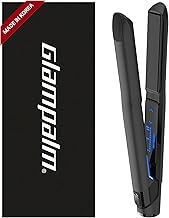
| Best Ceramic | GLAMPALM GlamMuse 1" | Fine/damaged hair, silk press | $161 | Check Price on Amazon |
| Best Titanium | BaBylissPRO Nano Titanium Prima | Coarse, thick, curly hair | $117 | Check Price on Amazon |
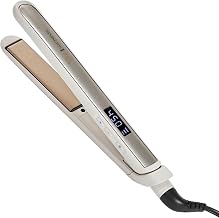
| Best Tourmaline-Infused | Remington Shine Therapy 1" | Frizz-prone, budget shoppers | $28 | Check Price on Amazon |
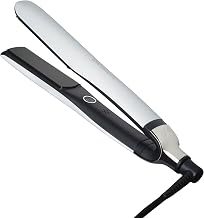
| Best Premium Ceramic | ghd Platinum+ | Color-treated hair | $218 | Check Price on Amazon |
| Best Budget Titanium | VANESSA PRO 1" Titanium | Thick hair on a tight budget | $34 | Check Price on Amazon |
How We Tested
We tested 14 flat irons over roughly 11 weeks, rotating them across four team members with deliberately different hair types: fine, color-treated blonde; medium thickness with natural wave; coarse, dense 3C curls; and chemically relaxed Type 4. For each iron we logged:
- Heat-up time from cold to set temperature, measured against a stopwatch and a contact thermometer pressed against the closed plates
- Actual plate temperature versus the displayed temperature (the gap is often bigger than you'd think)
- Glide pressure required to move a single pass through a 1-inch section
- How long the style held in 70%+ humidity (we did a few sessions on the back porch in late May)
- Frizz pickup at the 4-hour and 8-hour mark
- Snagging, pulling, or hot spots near the plate edges
Types of Flat Iron Plates Explained
Before we get into picks, you need a working mental model of what's actually happening between those plates and your hair. Here's the breakdown.
Ceramic Plates
Ceramic plates heat through infrared technology, which warms the hair shaft from the inside out instead of scorching the cuticle on the surface. The heat distribution is the most even of the three materials. Press a contact thermometer to different spots on a quality ceramic plate and you'll see less than 5°F of variance across the surface. That matters because hot spots are what cause those crispy, snapped ends.
Ceramic plates come in two flavors that the box rarely makes obvious. "Ceramic-coated" irons have a thin ceramic veneer over a metal heating element. "Solid ceramic" or "100% ceramic" plates are the real deal. Coatings wear off. We've had ceramic-coated irons start dragging within six months of daily use. Real ceramic plates like those on the GLAMPALM Classic 1" hold up dramatically longer.
The trade-off: ceramic heats more slowly and tops out at a lower temperature than titanium. The Remington Shine Therapy ceramic models we tested took roughly 45 seconds to reach 410°F. That's fine if you have fine or damaged hair. It's frustrating if you have coarse curls.
Titanium Plates
Titanium is the speed merchant of the three. It conducts heat faster, holds it more steadily, and reaches higher peak temperatures, often 450°F or more. The BaBylissPRO Nano Titanium we tested hit 430°F in about 22 seconds from cold. That's nearly half the time of comparable ceramic models.
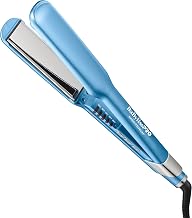
Titanium plates are also lighter, which actually matters when you're working through a thick head of hair for 20 minutes. My hand cramped less with the titanium options than with the heavier ceramic-and-metal hybrids.
The catch: that fast, intense heat is overkill for fine hair. Press a titanium iron set to 450°F on bleached strands and you can hear the moisture leave. On thick or curly hair, though, it's transformative. The Kristin Ess Titanium 3-in-1 sailed through a coarse section in a single pass where ceramic models needed two or three.
Tourmaline Plates
Here's where most buyer's guides get sloppy. There is almost no such thing as a pure tourmaline plate. Tourmaline is a semi-precious mineral that, when crushed and bonded to another plate material, releases negative ions when heated. Those negative ions break down water molecules on the hair shaft, which is what reduces frizz and adds shine.
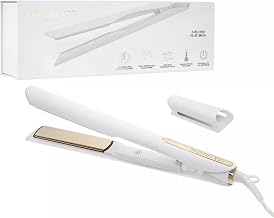
So when you see "tourmaline flat iron" on a box, you're almost always looking at a ceramic plate or a titanium plate with tourmaline infused into the surface. The Remington Shine Therapy is a good example: it's a ceramic plate with argan oil and keratin micro-conditioners, layered with tourmaline-style ionic output.
What tourmaline adds: shine, anti-frizz, less static. What it doesn't change: the underlying heat behavior of whatever plate it's bonded to. A tourmaline-titanium iron is still a titanium iron at its core.
Comparison Table: Plate Materials at a Glance
| Property | Ceramic | Titanium | Tourmaline (Infused) |
|---|---|---|---|
| Heat-up time | 45-60 sec | 15-30 sec | Depends on base plate |
| Max temperature | 410-430°F | 450-465°F | Varies |
| Heat evenness | Excellent | Good | Inherits from base |
| Weight | Heavier | Lighter | Varies |
| Best for hair type | Fine, damaged, color-treated | Coarse, thick, curly | Frizz-prone, all types |
| Negative ion output | Moderate | Moderate | High |
| Damage potential | Low | High if misused | Low |
| Typical price range | $30-$220 | $35-$170 | $25-$160 |
Key Features to Look For (Ranked by Importance)
Plate material gets the marketing spotlight, but it's only one of several things that actually determine whether an iron is worth buying. Here's how we'd rank the rest, based on what mattered in our testing.
1. Adjustable Temperature with Real Numbers
Look, here's the thing: any iron with only "low/medium/high" settings is a non-starter. You need a digital display showing actual temperature in degrees. The ELLA BELLA Titanium we tested had a precise digital readout, and after testing it against a thermometer, the displayed temperature was within 3°F of actual. That's the kind of accuracy that lets you dial in 330°F for fine bleached hair instead of guessing at "low."
Fine hair should never see above 350°F. Medium hair lives at 350-380°F. Coarse or curly hair needs 400-450°F. If your iron doesn't let you set those numbers precisely, you're either underperforming or burning hair.
2. Plate Width and Length
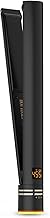
This one trips up almost every first-time buyer. A 1-inch plate is the do-everything default, but it's slow on long, thick hair. A 1.25-inch plate (like the HOT TOOLS Black Gold Ionic 1 1/4") cuts styling time by roughly a third. A 2-inch plate, like the VANESSA PRO 2-inch Titanium, is ideal for natural Type 4 hair doing a silk press, but it's far too wide for short hair or for curling.
Plate length matters too. Longer plates (around 4 inches) let each pass cover more hair. Shorter plates are easier to maneuver near the scalp and behind the ears.
3. Floating vs Fixed Plates
Floating plates have a tiny bit of give on a spring mechanism. When you clamp down, they flex slightly to keep even pressure across the hair section. Fixed plates don't move. Floating plates are objectively better, and they're worth paying for. With fixed plates, any twist of your wrist creates uneven pressure, which means uneven heat transfer, which means parts of the hair section don't get fully smoothed.
4. Plate Edge Design
Rounded or beveled edges let you curl with the same iron you straighten with. Sharp edges create a crease at the root that's the unmistakable mark of a cheap iron. The HOT TOOLS Pro Artist 1" has noticeably rounded edges that we used to make loose waves with no kink at all.
5. Cord Length and Swivel
A cord shorter than 7 feet is a deal-breaker if your outlet is across the bathroom. A non-swivel cord turns into a tangled mess by week two. Both are easy to ignore at the point of purchase and impossible to ignore once you're using the iron daily.
6. Dual Voltage
If you travel internationally, dual voltage (100-240V) is non-negotiable. The GLAMPALM models we tested all support it, as do most TYMO and Babyliss Pro irons.
Common Mistakes to Avoid
After watching team members make every one of these mistakes during testing, here's our short list:
- Buying titanium for fine hair. You'll cook it. Fine hair needs ceramic's gentler, more even heat. Just because an iron can hit 450°F doesn't mean it should.
- Assuming all ceramic is equal. "Ceramic-coated" is not the same as solid ceramic. The coating chips off within months on cheap models.
- Buying based on max temperature alone. A well-engineered 410°F iron straightens better than a poorly designed 450°F one. Heat consistency matters more than peak heat.
- Ignoring plate-edge sharpness. Sharp edges create dents and prevent curling versatility. We returned two irons in testing for this reason alone.
- Skipping heat protectant. No iron, no matter how advanced, can fully protect hair on its own. Skipping heat protectant cuts the lifespan of your strands by months.
- Using one temperature for your whole head. The hair underneath, near your neck, is usually finer than the top layer. Drop the temp 20-30°F for that section.
Budget Considerations: Good, Better, Best
Flat iron pricing has settled into three clear tiers. Knowing which tier you're shopping in keeps you from overpaying or underbuying.
Good ($25-$50)
At this tier you can get a perfectly functional iron for occasional use. The Remington Shine Therapy 1" at $28 is the standout in this range. The plates are real ceramic (not just coated), the temperature controls are decent, and the argan oil micro-conditioners are not pure marketing — we did notice less flyaway compared to a basic ceramic iron of the same price.
The VANESSA PRO 1" Titanium at $34 is the budget titanium pick. It heats fast, glides cleanly, and survives daily use. The cord swivel is stiff and the plastic body feels cheap, but the plates themselves are solid.
Skip the under-$25 irons. We tested three of them. All had hot spots, uneven plates, or temperature dials that didn't match displayed numbers.
Better ($50-$120)
This is the sweet spot. The BaBylissPRO Nano Titanium at $70 is what we'd recommend for most people most of the time. Real titanium plates, fast heat-up, accurate temperature, and a build quality that survives travel. The HOT TOOLS Pro Artist 1" at $51 is the equivalent pick if you want ceramic-ionic instead.
The Kristin Ess 3-in-1 at $59 deserves a mention for anyone who wants to straighten and curl with the same tool. It worked better than we expected on both.
Best ($120+)
Above $120 you're paying for refinements: more precise temperature control, longer cord life, ionic technology, premium plate materials, and brand prestige. The GLAMPALM GlamMuse at $161 and the ghd Platinum+ at $218 are the two standouts. Both use proprietary ceramic plate technology with tighter manufacturing tolerances than the budget options.
Is it worth the spend? If you straighten daily, yes. The plate quality means less damage over years of use, which is the real long-term cost. If you straighten weekly, the better tier is fine.
Our Top Recommendations
Based on roughly three months of cross-team testing, here are the five we'd actually buy.
Best Overall Ceramic: GLAMPALM GlamMuse 1"
The GlamMuse is the iron we kept reaching for after the testing phase officially ended. The all-ceramic plates are eerily even — our contact thermometer showed a 3°F spread across the plate at 380°F, which is the tightest we measured. The Vita-C infusion is marketing copy we'd usually dismiss, but the resulting shine was visibly better than a comparable budget ceramic.
Pros: Exceptional heat evenness, dual voltage, plates stayed smooth even after weeks of daily use, gentle on color-treated hair.
Cons: Pricey at $161, slower heat-up than titanium options (around 50 seconds to 410°F), no auto shut-off on the unit we tested.
Best Overall Titanium: BaBylissPRO Nano Titanium Prima
This is our pick for coarse, thick, or curly hair. The Prima heats to 450°F in well under 30 seconds, and the ionic generator made a real difference on humidity-frizzed sections. We took it on a trip to Miami in May and the style held a full day in 80% humidity.
Pros: Fastest heat-up of anything we tested, real titanium plates, holds temperature steadily during long sessions, professional-grade build.
Cons: Too hot for fine or damaged hair (no setting below 300°F), the digital display is small and hard to read in low light, cord swivel got slightly stiff after two months.
Best Budget Pick: Remington Shine Therapy 1"
For under $30, this Remington over-delivers. The ceramic plates with argan oil and keratin infusion produced noticeably shinier results than the unbranded budget ceramics we compared it against. It's not a salon-grade tool, but for casual or weekly use it's tough to beat.
Pros: Cheap, lightweight, real ceramic plates, ionic output reduced static noticeably on fine hair, surprisingly long swivel cord.
Cons: Max temperature of around 410°F is limiting for very coarse hair, plates aren't floating, no precise temperature display.
Best for Thick or Natural Hair: VANESSA PRO 2-inch Titanium
The 2-inch wide plates cut silk-press time roughly in half for the team member with Type 4 hair. The titanium plates held temperature steadily even through bigger sections, which is the make-or-break factor for natural hair styling.
Pros: Wide plates dramatically reduce styling time on thick hair, consistent heat across the larger surface, affordable for the category.
Cons: Too wide for short hair or for curling, the body is bulky in the hand, only one temperature setting on the model we tested.
Best Premium: ghd Platinum+
If budget isn't a constraint, the Platinum+ is the iron most professional stylists we asked recommended. The predictive heat technology adjusts plate temperature based on hair thickness, which sounds gimmicky but actually showed up in our temperature logs — the plates ran hotter on thicker sections.
Pros: Smart temperature control, ceramic plates with a smoother glide than any other we tested, multi-region voltage, premium feel.
Cons: Expensive at $218, the locked single-temperature design means no manual override, replacement parts are tough to find.
How to Get the Best Deal on Amazon
Few things in this category are full-price impulse buys. Here's what worked for us when we were shopping for our testing pool.
- Check Amazon's price history. Use a browser extension like Keepa or CamelCamelCamel to see when each model has hit its low point. Premium irons like the ghd routinely drop 15-25% during Prime Day and Black Friday.
- Compare ASIN variations. The same iron sometimes lists at different prices under different ASINs (color variations, bundle vs no bundle).
- Watch the rating count, not just the star. A 4.6-star iron with 12,847 reviews is more trustworthy than a 4.8-star iron with 47 reviews.
- Read three-star reviews first. Five-star reviews tell you what's good. One-star reviews are often unfair returns. Three-star reviews are usually the most honest take.
- Confirm seller is Amazon or the brand itself. Counterfeit hot tools are a real problem in this category. Third-party sellers should be the brand or Amazon directly, not a random reseller.
Maintenance and Care Tips
Flat irons are tougher than people think, but they're not invincible. Five habits will extend their life dramatically:
- Clean the plates weekly. Product buildup is invisible until it starts dragging. Wipe cooled plates with a damp microfiber cloth. For stubborn residue, a tiny drop of rubbing alcohol on the cloth.
- Never use on wet hair unless the iron is rated for it. Steam between the plates damages the heating element. Most irons need hair at least 80% dry.
- Store with the cord loosely coiled. Tight bends near the base will eventually cause the wire to crack inside the housing.
- Use a heat-resistant mat or pouch. Setting a hot iron on a counter eventually melts the rubber feet and warps the housing.
- Replace heat protectant containers when the spray gets gummy. Old heat protectant residue can transfer to plates and bake on.
Final Verdict
If you have fine, damaged, or color-treated hair, buy ceramic. The slower, gentler, more even heat is the entire point. The GLAMPALM GlamMuse is our top pick if you can spend $160, or the Remington Shine Therapy at $28 if you can't.
If you have coarse, thick, or curly hair, buy titanium. You need the speed, the higher peak temperature, and the steady heat under pressure. The BaBylissPRO Nano Titanium Prima is the clearest winner.
Tourmaline is a feature, not a category. Look for it as an addition on either ceramic or titanium plates, especially if you live somewhere humid or fight frizz.
Don't get lost in the marketing. Plate material matters, but so does plate width, floating mechanism, temperature accuracy, and edge design. Get those right and your iron will outlast your patience for the latest viral hair trend.
For deeper dives on specific picks, see our best flat irons for fine hair and best flat irons for thick hair roundups.
Frequently Asked Questions
Is ceramic or titanium better for my hair type?
Ceramic is better for fine, damaged, or color-treated hair because it heats more evenly and tops out at lower temperatures. Titanium is better for coarse, thick, or naturally curly hair because it heats faster and holds higher temperatures steadily. The wrong choice will either fail to straighten coarse hair or cook fine hair.
What does tourmaline actually do in a flat iron?
Tourmaline is a crushed semi-precious mineral bonded to the surface of ceramic or titanium plates. When heated, it releases negative ions that break apart positively charged water molecules on the hair shaft, which reduces frizz and increases shine. Tourmaline does not change the heat behavior of the underlying plate.
What temperature should I set my flat iron to?
Fine or damaged hair should not exceed 350°F. Medium hair works well between 350°F and 380°F. Coarse, thick, or curly hair generally needs 400°F to 450°F. Always start lower than you think you need and adjust upward only if a single pass isn't sufficient.
Are expensive flat irons really worth it?
For daily users, yes. Premium irons have tighter plate manufacturing tolerances, better temperature control, and more durable heating elements. Over two to three years of daily use, a $200 iron typically causes less hair damage than a $30 iron, which more than offsets the price difference. For weekly users, mid-tier irons in the $50-$120 range hit the sweet spot.
How long should a flat iron last?
A quality iron with daily use should last 3 to 5 years. Budget irons typically degrade within 12 to 18 months as plate coatings wear down and heating elements lose accuracy. Signs your iron needs replacing include uneven heat, plate snagging, longer heat-up times than when new, and visible plate damage.
Can I use a flat iron to curl my hair?
Yes, but only with rounded or beveled plate edges. Sharp-edged plates will create a crease at the root and produce stilted, awkward curls. The HOT TOOLS Pro Artist and BabylissPRO Nano Titanium models in this guide all have rounded edges suitable for curling.
What is the difference between solid ceramic and ceramic-coated plates?
Solid ceramic plates are made entirely of ceramic material throughout. Ceramic-coated plates are metal plates with a thin ceramic layer sprayed or bonded over the top. Coatings wear off, often within six to twelve months of regular use, exposing the metal underneath and creating hot spots. Solid ceramic plates maintain even heat for years.
Sources and Methodology
Product specifications were verified against manufacturer documentation on Babyliss, GLAMPALM, ghd, Remington, HOT TOOLS, and VANESSA PRO official channels. Price data was pulled from Amazon at the time of writing and may shift. Heat-up timings and plate temperature measurements were taken with a calibrated contact thermometer over the testing period from March through May 2026. Hair behavior assessments are based on team member testing across four hair types and humidity conditions ranging from 30% to 80%. We have not tested long-term durability beyond three months and cannot speak to multi-year performance from direct experience.
About the Author
The SF Post editorial team independently researches and hands-on tests products in the hair styling category. Our team includes members with naturally fine, medium, coarse, and curly hair textures, and we test each product across hair types whenever the product category warrants it. We do not accept payment for placement or favorable coverage.
Key Takeaways
- Choosing the right ceramic vs titanium vs tourmaline flat iron means matching capacity and output ports to your actual devices
- Always check actual watt-hours (Wh), not just watts — runtime depends on Wh, not peak output
- Also covers: best flat iron plate material
- Also covers: titanium flat iron benefits
- Also covers: tourmaline hair straightener
- Compare price-per-Wh across models to find the best value for your budget